How UK Businesses Are Installing Solar With £0 Upfront Cost
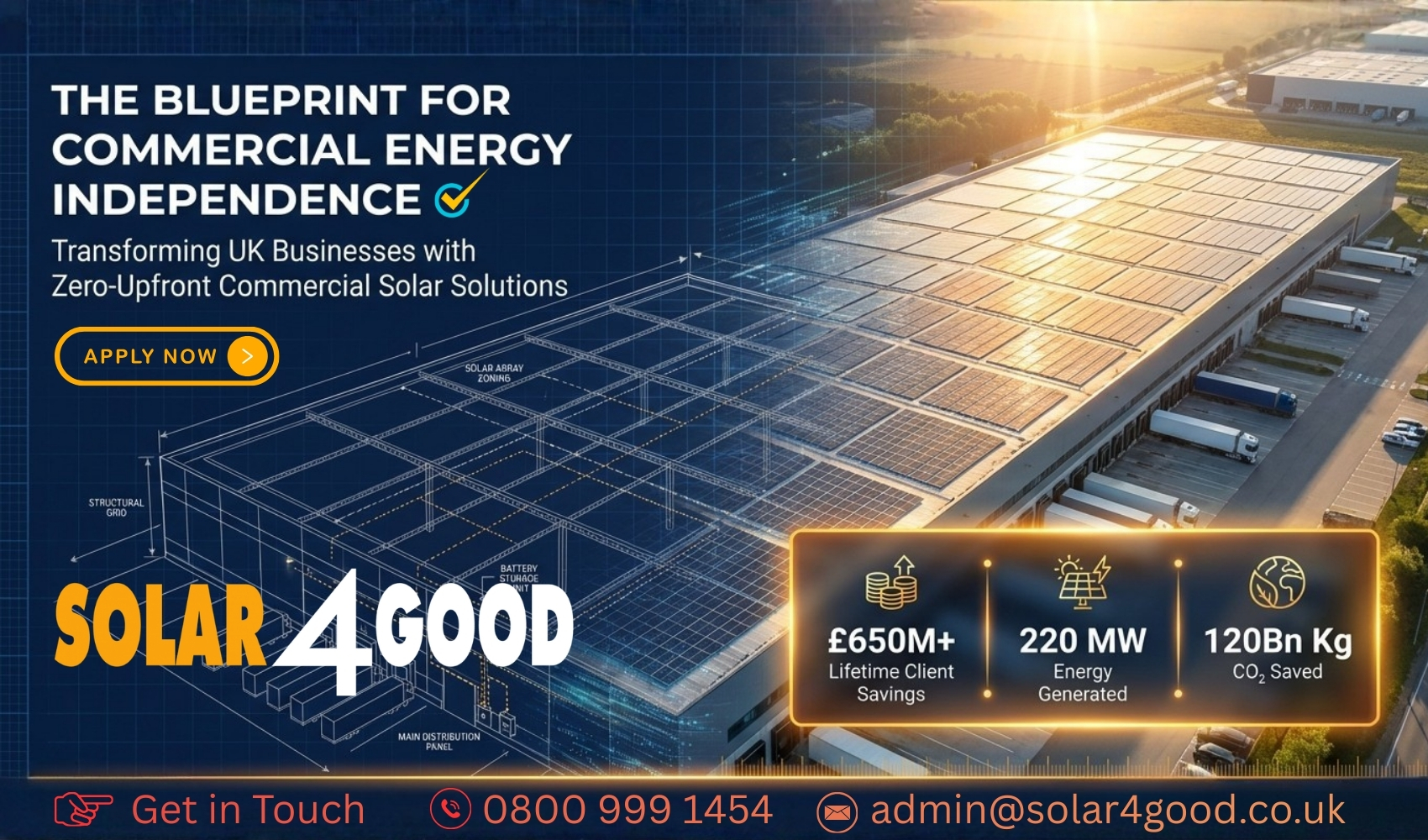
For many businesses across the UK, switching to solar energy is an obvious decision. Electricity prices remain unpredictable, sustainability regulations are tightening, and companies are under increasing pressure to reduce operational costs while improving their environmental performance.
Yet one barrier still stops many organisations from moving forward with renewable energy: the upfront investment.
While commercial solar systems can generate significant long-term savings, the initial capital required can feel substantial, especially for businesses prioritising cash flow or expansion.
Fortunately, the solar industry has evolved rapidly. Today, companies can install solar panels without paying the full installation cost upfront, thanks to modern solar financing models such as Power Purchase Agreements (PPAs) and structured commercial solar funding.
These solutions are opening the door for businesses of all sizes to transition to clean energy faster than ever before.
The Changing Economics of Commercial Energy
Energy costs have become one of the most volatile operational expenses for UK businesses.
Over the past few years, electricity prices have fluctuated dramatically, creating uncertainty for organisations trying to manage long-term budgets. Manufacturing plants, warehouses, offices, and retail chains all rely heavily on electricity to operate.
Commercial solar installations allow companies to generate their own electricity directly from their buildings, reducing reliance on the grid and stabilising long-term energy costs.
Solar technology has also become far more efficient. Modern photovoltaic panels can generate significant electricity even in the UK’s variable climate, making solar a practical solution for businesses nationwide.
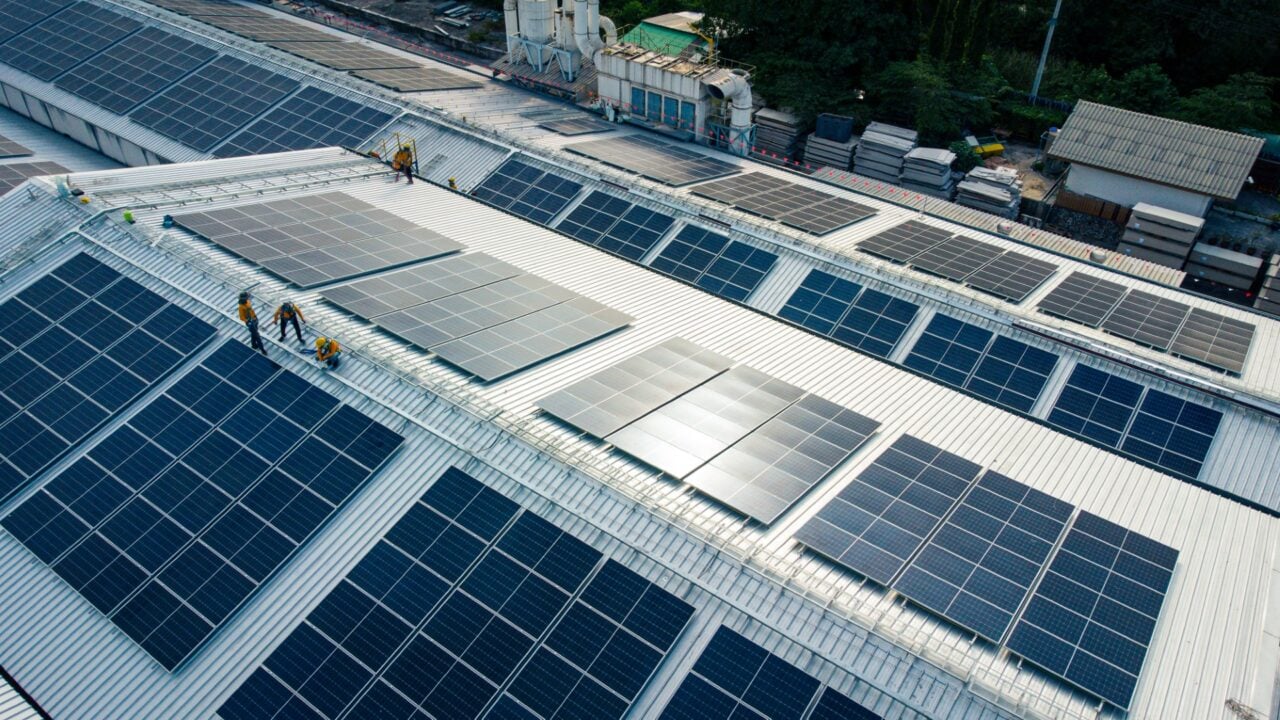
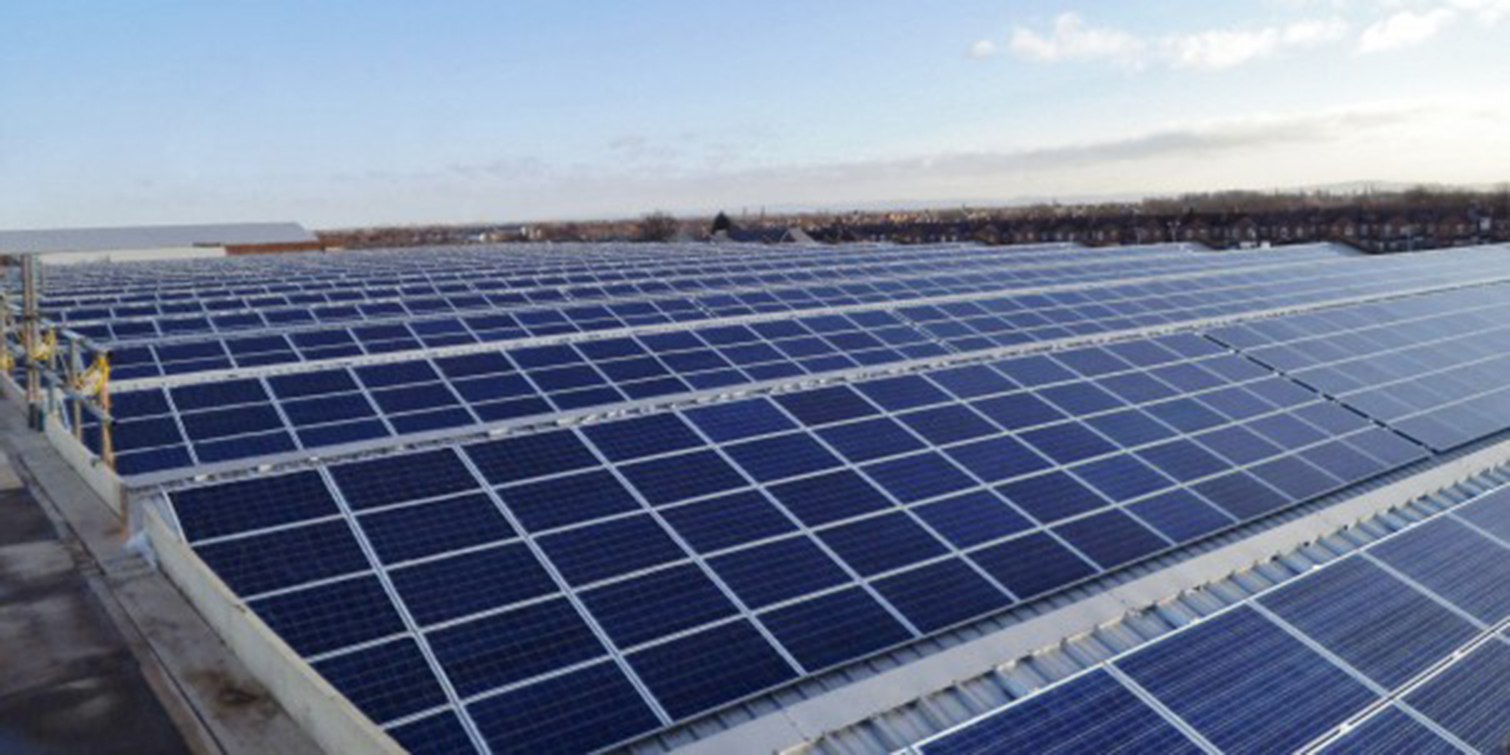
For organisations with large roof spaces, solar installations can transform unused surfaces into productive energy infrastructure.
What Is a Solar Power Purchase Agreement (PPA)?
One of the fastest-growing models for commercial solar in the UK is the Power Purchase Agreement (PPA).
A PPA allows a business to install solar panels on its property without paying for the system itself. Instead, a solar provider finances and installs the system, and the business agrees to purchase the electricity generated at a fixed, discounted rate.
This arrangement creates several advantages:
No large upfront capital investment
Immediate savings on electricity costs
Long-term price stability
Reduced exposure to energy market fluctuations
The business simply pays for the electricity produced by the solar system — typically at a rate lower than the grid price.
For companies looking to improve cash flow while reducing energy costs, this model can be particularly attractive.
Why Commercial Buildings Are Perfect for Solar
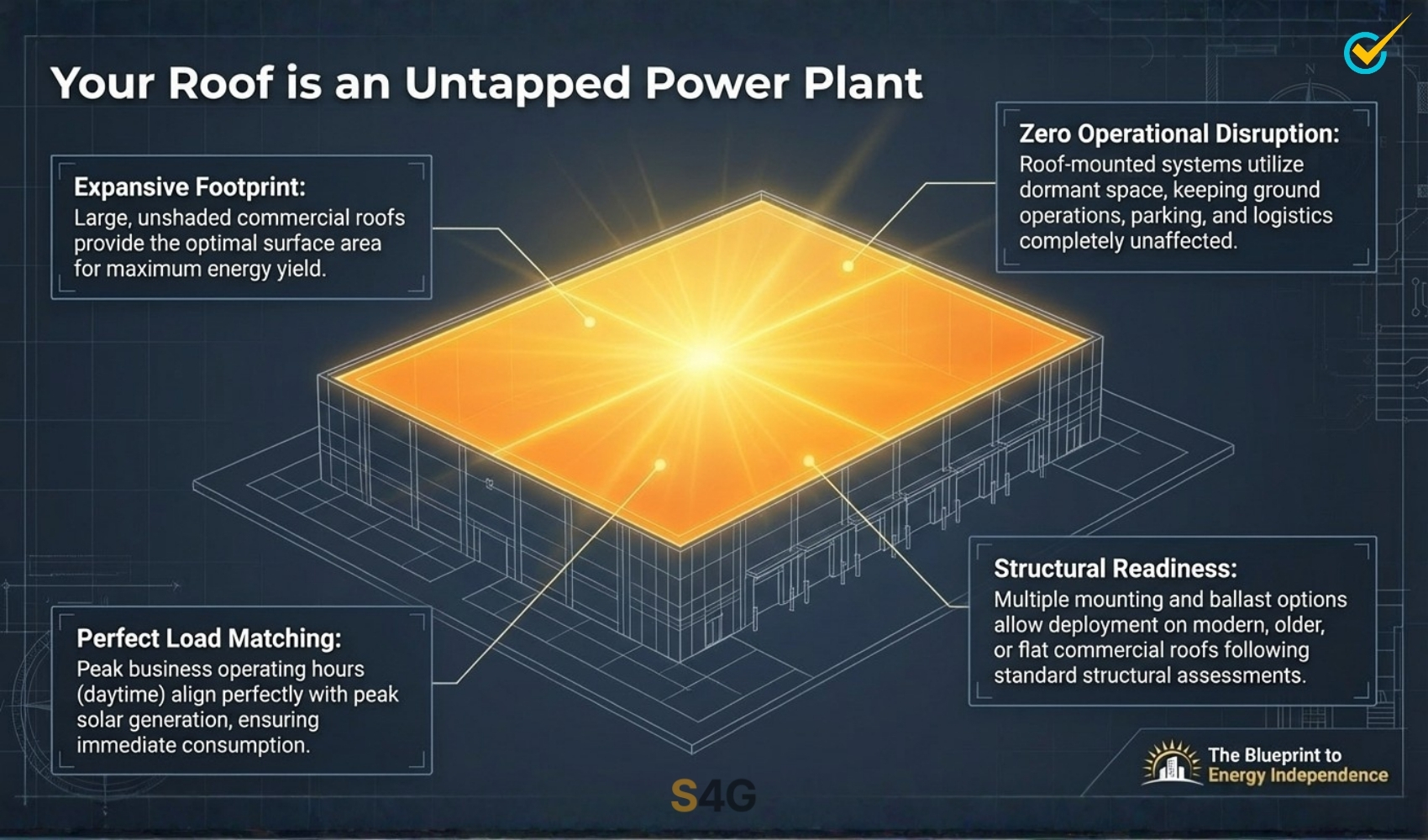
Commercial buildings often have characteristics that make them ideal for solar installations.
Warehouses, distribution centres, factories, and large office buildings usually feature expansive roof areas with minimal shading, creating optimal conditions for solar panel systems.
In addition, many businesses consume the majority of their electricity during the day, which aligns perfectly with solar generation.
This means companies can use most of the electricity they produce, rather than exporting it back to the grid.
Industries that benefit particularly well include:
-
logistics and warehousing
-
manufacturing
-
retail centres
-
agricultural operations
-
office buildings
-
healthcare facilities
For many of these sectors, solar installations can significantly reduce energy costs while supporting corporate sustainability commitments.
Long-Term Energy Security for Businesses
One of the biggest advantages of commercial solar systems is predictability.
Grid electricity prices can fluctuate based on global energy markets, government policies, and supply chain pressures. These fluctuations make it difficult for businesses to forecast energy expenses accurately.
Solar power, on the other hand, offers stability.
Once installed, solar systems generate electricity for 25 years or more, providing a long-term energy source that businesses control directly.
Even companies that choose to finance their systems still benefit from predictable energy pricing and reduced exposure to future electricity price increases.
For businesses with large energy demands, this can represent a major competitive advantage.
Supporting Corporate Sustainability Targets
Environmental responsibility is now a key part of corporate strategy for many organisations.
Companies across the UK are setting ambitious targets to reduce carbon emissions and transition toward renewable energy.
Commercial solar installations help businesses make measurable progress toward these goals.
Solar power reduces reliance on fossil fuels and lowers the carbon footprint associated with purchased electricity, helping organisations cut Scope 2 emissions.
For companies reporting on ESG performance or working toward net-zero targets, installing solar panels is one of the most visible and effective steps available.
It also sends a clear signal to customers, partners, and investors that the organisation is committed to sustainable operations.
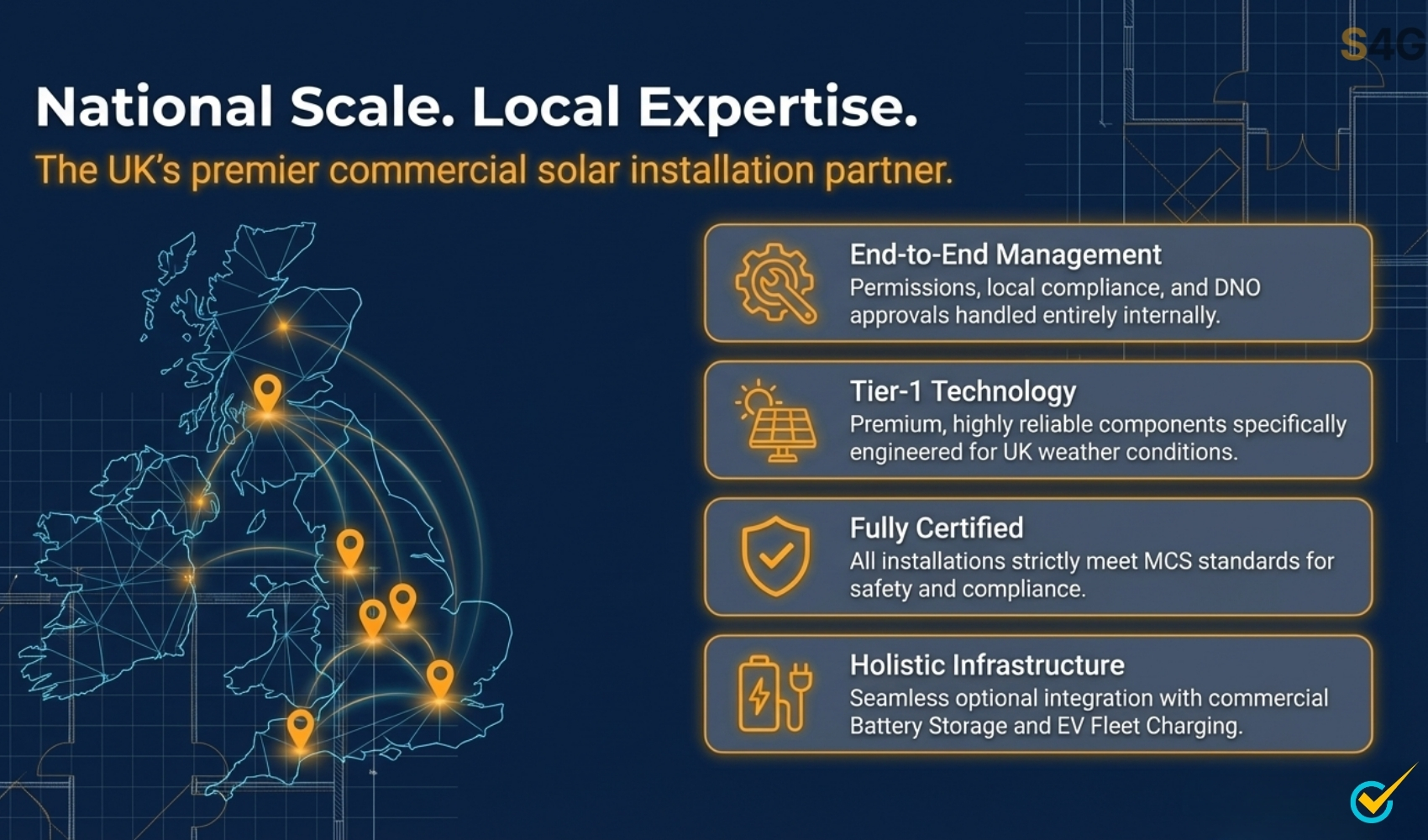
The Role of Expert Solar Installers
Commercial solar projects require more than simply installing panels on a roof.
Every building has different structural conditions, energy requirements, and electrical infrastructure. Designing an efficient system requires careful planning and engineering.
Professional solar installers conduct detailed site assessments, energy analysis, and structural evaluations before recommending a system design.
This process ensures that the installation will generate the maximum amount of electricity while maintaining safety and long-term performance.
Experienced installers also manage key elements such as:
-
grid connection approvals
-
electrical compliance
-
system monitoring integration
-
ongoing maintenance and support
Working with an experienced commercial solar installer ensures that the project runs smoothly from planning to commissioning.
Why Businesses Are Moving to Solar Faster Than Ever
The commercial solar market in the UK is expanding rapidly.
Businesses are recognising that renewable energy is no longer simply an environmental initiative — it is a financial strategy.
Companies installing solar today are securing long-term energy stability, reducing operating costs, and strengthening their sustainability credentials.
With modern financing options removing the barrier of upfront investment, solar has become accessible to a much wider range of organisations.
From logistics hubs and factories to offices and retail parks, commercial solar installations are becoming a standard feature of modern business infrastructure.
A Smarter Energy Future for UK Businesses
For businesses looking to reduce energy costs while strengthening their sustainability strategy, solar power offers a clear path forward.
With the right installation partner and financing structure, companies can transition to renewable energy without disrupting operations or tying up capital.
As energy markets continue to evolve, organisations that invest in their own energy generation will be better positioned for long-term stability and growth.
Commercial solar is no longer just an upgrade — it is becoming an essential part of the future of business energy.
Transparent reviews help build stronger businesses and better customer experiences. If Solar4Good has helped power your home or business with solar energy, consider leaving a review on their Clearsay profile to support informed decisions within the community:
Clearsay.co.uk — Empowering Trust. Accelerating Growth. Integrate with Confidence.
Recent Blogs
Solar4Good: How UK Businesses Are Installing Solar With £0 Upfront Cost

⚡ Pro IT Electrical: A Trusted Local Electrician Now on Clearsay Premium